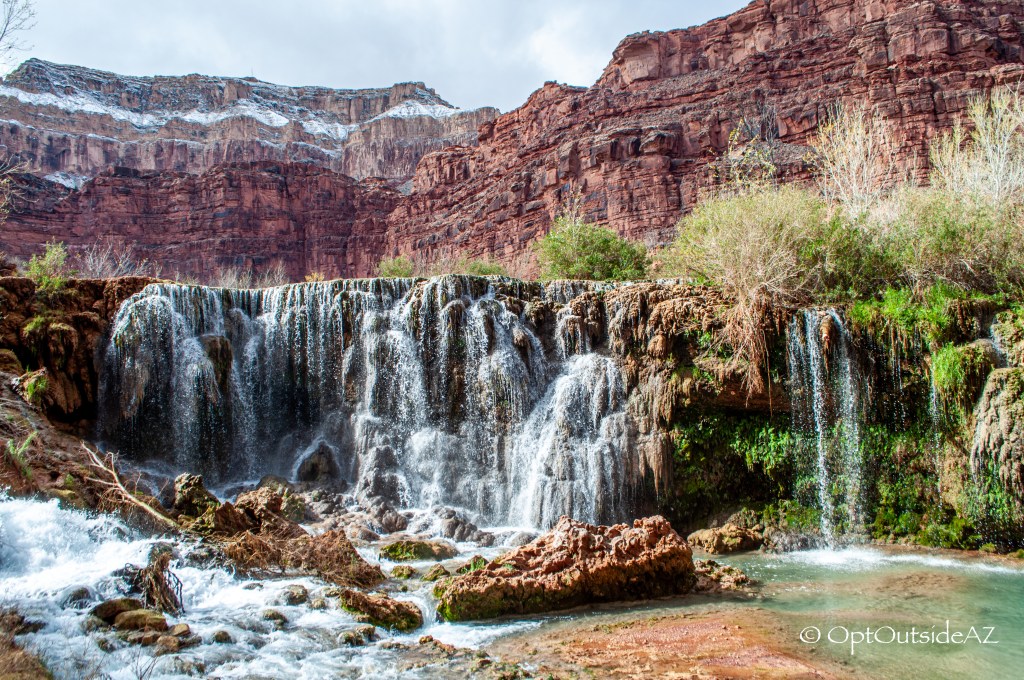
Reservations, Logistics, & Gear Guidance to Access 5 Epic AZ Waterfalls…Even in the Winter
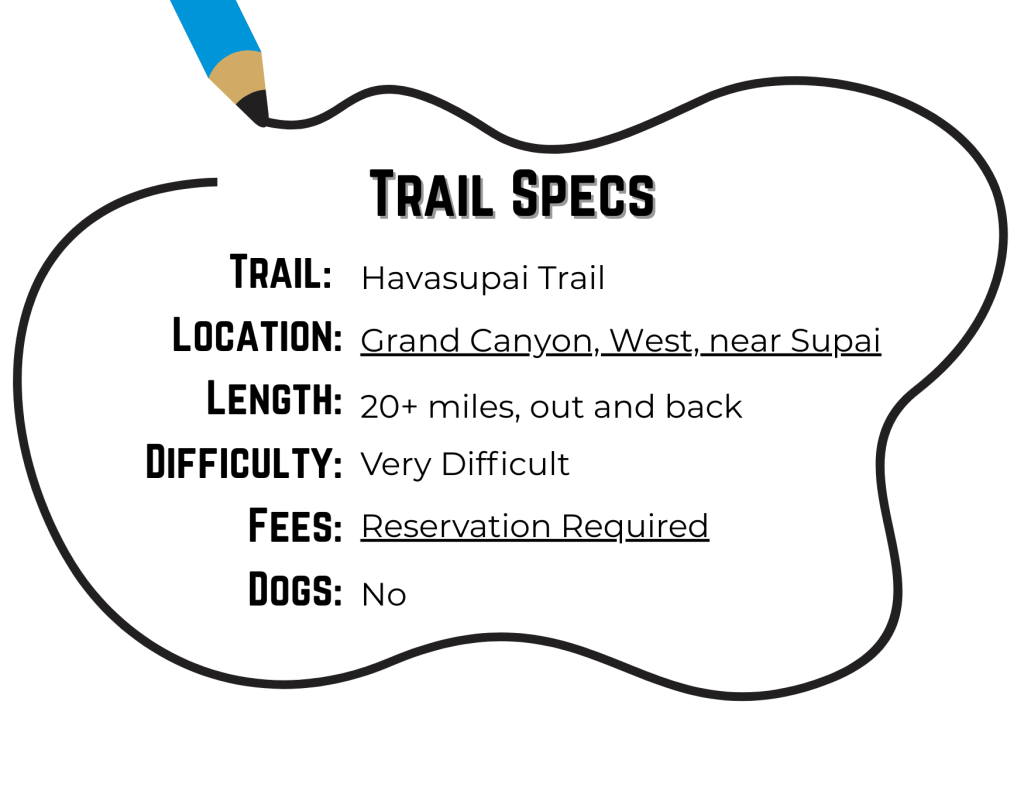
A DEBRIEF
If you are one of the lucky ones to have a story to tell, it probably involves words like “jaw-dropping,” “epic,” or “glorious.” I would hear these words, then complete a vision: me, in front of a massive blue waterfall, a warm sun beating on my face, with bright green lush vegetation atop orange rock, glistening with water droplets. Nice vision, right?
My first taste of the Havasupai Trail and all the beautiful waterfalls would be quite different. I did not anticipate going during winter. I did not think about the 10-mile hike down the canyon on slick, hard ground while carrying a 50 lb pack. And I did not consider that I had never backpacked for multiple days in cold weather. Yet, overcoming challenging obstacles has a way of giving you exactly what you need, so we committed.
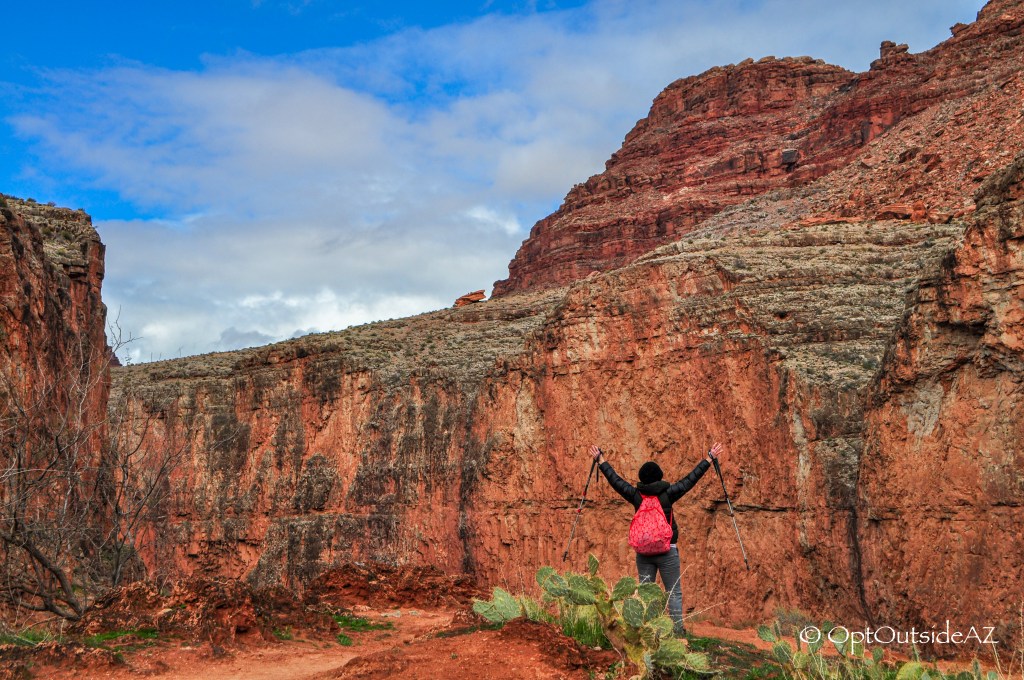
Before we dig into the details… let me prep you.
When you make the decision to hike the Havasupai Trail, you cannot simply head there the next day. The Grand Canyon is a Natural Wonder of the World, and this segment in particular is quite isolated. That is why tens of thousands of people aspire to make a reservation when the system opens, and by the time the reservation game is over, only 12–25k people will be approved annually to visit. Compared to other sections of the Grand Canyon, which see over 6 million visitors annually, you will basically have this section of the canyon to yourself.
The reservation system opens at 8am AZ time on February 1st. For a mere additional $45, you can opt into the early reservation group, which opens January 21st at 8am AZ time. Subscribe and I will send you a reminder to get your reservation situated!
Follow these initial steps to get you hiking the Havasupai Trail:
- Subscribe to Opt Outside AZ to receive reminders to complete your reservation.
- Be prepared financially. You will be spending $455 for a first-come, first-serve campsite for 3 nights at Havasupai Campground.
- If not hiking solo, start talking to potential hiking partners. The more people trying to reserve, the more chances you have to obtain a spot (12 spots max per reservation).
- Be realistic. Canceling your dates will result in losing 50% of your deposit. This is non-negotiable.
- Determine if you are going to hire a pack horse for $400. If so, pay for the full round-trip cost. Your horse can carry up to 4 bags at 130 pounds total max.
- Determine a viable Potential Alternate Trip Leader (PATL) in case the leader cannot make the trip. This will make it easier for the others in the group to proceed.
- Log into the Havasupai Reservations system when passes become available.
- Secure your reservation!
- Download the OOAZ Gear Lists to get you started on your preparations for your trek. Once you subscribe, you can download all the Backpacking Gear Lists.
- Get your vacation approved, make your travel plans, and start acquiring gear.
- Trail conditioning and training for the trail.
- Allow time to pick up your wristbands prior to the hike down at Grand Canyon Caverns & Inn. Your reservation will include pertinent details.
HOW TO GET THERE
Make your way to Peach Springs in northern Arizona. We came from Phoenix, so the day before our reservation we headed north to get closer to the Grand Canyon. Just past Black Canyon City on the I-17, we opted for the scenic route: AZ-69 to AZ-89, and enjoyed the small-town charms surrounded by the Prescott National Forest. Once you hit US-40, you are only an hour away from Peach Springs. Ash Fork is a good place to indulge your touristic urges.
If you do not want to drive a long distance before your hike, my recommendation would be to take a night, or a few, beforehand to make your way to this area. VRBO is a great option for finding nice properties to rent and get yourself prepared, or we like to rest at the Hualapai Lodge. Comfortable and convenient, you can be fed at their restaurant, buy groceries nearby, gas up, head to neighboring Truxton for additional resources, and get a good night of rest before the hour-plus drive and the 13-mile trek down into the canyon. There is a nearby railroad track and, surprisingly, we were unbothered, but keep this in mind if you are sensitive to trains. *Also, remember: Peach Springs is on Indigenous land and, therefore, is a dry town.
If you’re planning to turn this epic journey into the Grand Canyon into a longer excursion,
staying nearby before your hike can make everything feel far more manageable.
Affiliate link — supports Opt Outside AZ at no extra cost to you 💚
My First Experience
During my first attempt at getting a campsite secured a few years back, I was one of the many locked out of the system for nearly three hours. By the time I was able to log in successfully, the only option available was in a little over two weeks: February 17th–20th.
Game on.
My hiking partner and I had 15 days to prepare for 3 days of cold-weather backpacking. 15 days. 15! This is not what I was anticipating when I first decided I was going to hike into this part of the Grand Canyon. Lacking most of the required equipment, attire, knowledge, etc., and with just two weeks, it was not a lot of time. However, I believe I work best under pressure. Thanks to many vendors and online retailers, Amazon! C&S Sporting Goods! Cabela’s! REI! Big 5! Walgreens! Trader Joe’s! And, of course, friends. We received essential help and information that contributed to a success in and out of the canyon.
I have created several Gear Lists for this backpacking trip: Essentials, Food, Cooking related, Clothing, Toiletries, Miscellaneous, which I hope can be treated as a helpful start for your choices on what you bring. It’s a necessary balance between needs, wants, and what you can carry, and these lists were trialed, errored, refined, and edited down to core needs.
*Keep this in mind: when I checked in for my last few trips, I did not need to pick up my wristband at the Grand Canyon Caverns Inn in Peach Springs before my dates. These 2025 FAQs state otherwise. Upon registration, make sure to determine whether you can obtain your wristband in Supai or need to obtain it at the inn.
The night before at the Hualapai Lodge, we spent the night packing, weighing, re-packing, and taking occasional jaunts into the cold with our clothing to ensure our selections were appropriate for the upcoming mid-20 to low-10 temps. The final pack weigh-in was just under 50 lbs. Thankfully, the campground provides access to a clean and bountiful spring, so that heavy need will not need to be hauled in. And the goals were to use everything, eat like Kweens, and pack everything out.
Breakfast was limited to fruit, soupy oatmeal, cereal, or toasted bread. You could pay a minimal fee for a warm breakfast too. Because of the snowfall from the previous night, this Phoenician did not know what to do about the thick layer of hard snow that covered the windshield. Thankfully, there was a police officer who let me borrow a measly snow scraper that did the job. So I write this in hopes that you might avoid my predicament by bringing a scraper or parking under some coverage.
Remember to fill up at the gas station. Peach Springs is the final place to obtain gasoline before starting the final 67-mile drive to Hualapai Hilltop. The driving conditions were pleasant even after the snowfall from the night before, and the land was coated in a bright, white powder. We drove through sparsely covered areas, grazing land, thick pines, and saw wild horses! Then the walls rose around us as we hugged the side of a mountain, before revealing the canyon dropping down.
Depending on your parking spot, you might want to drop off your gear at the trailhead before situating the vehicle for the next few days. One final toilet, and then you will see all the bags the mules will carry, gathered in a pile. If you are participating, leave your clearly labeled backpack in this area well before 10am. If it is after, it will not be brought down that day. We were able to get on the trail before 8am and arrived in the village of Supai before 3pm.
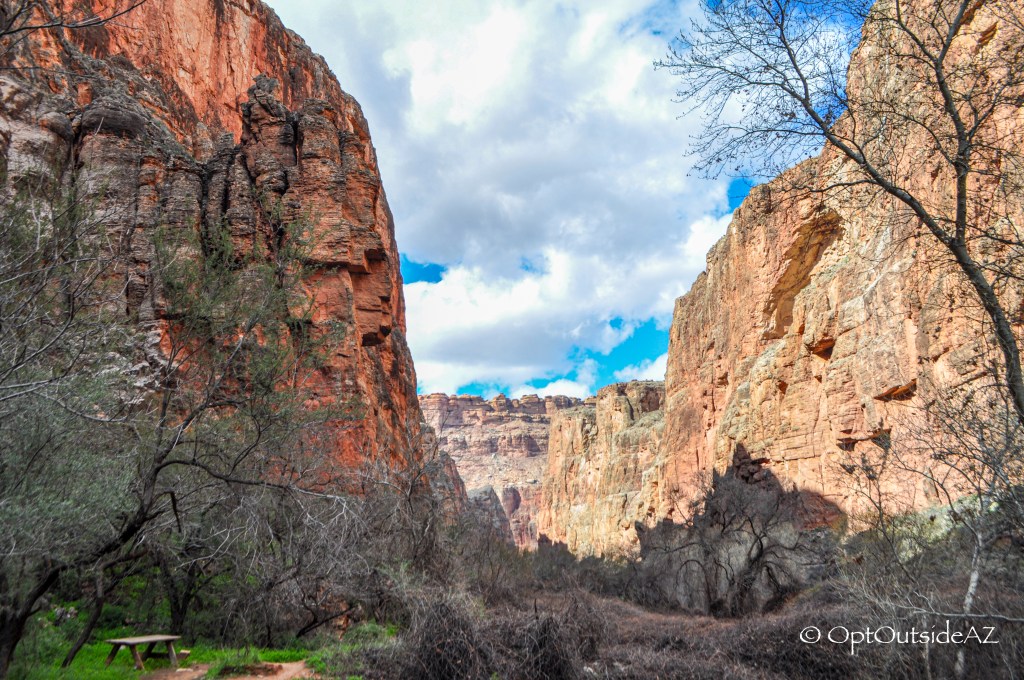
The beginning of this trail is like no other. You get a bird’s-eye view of all the varying colorful layers as you take several switchbacks down the mountain. The ground was extra hard from the cold and ice-slick at times, so we took it slow and relied heavily on our hiking poles.
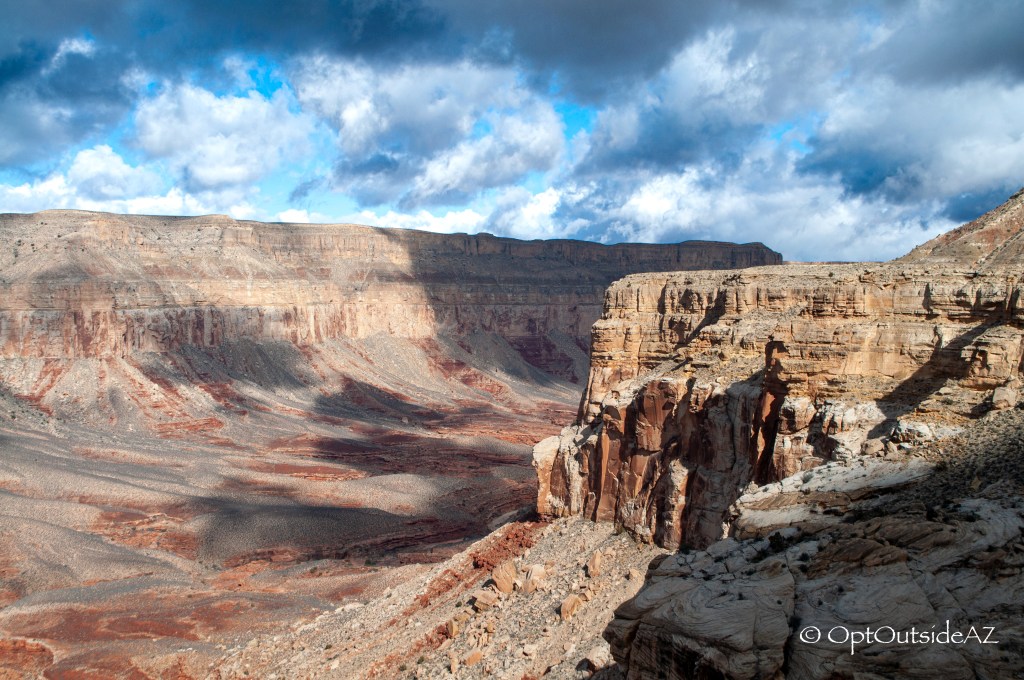
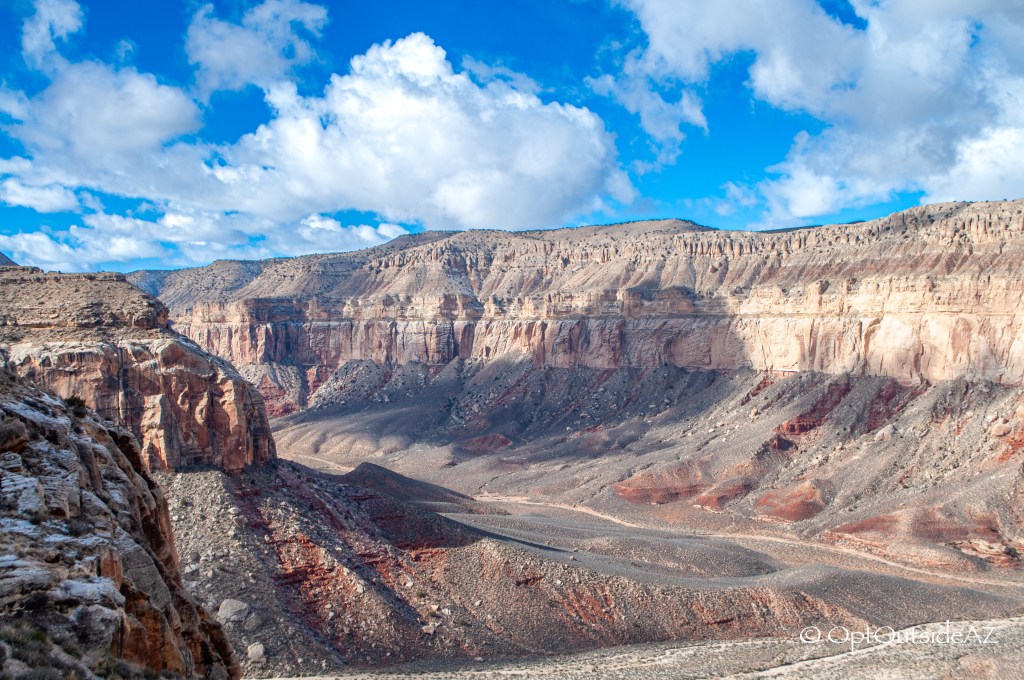
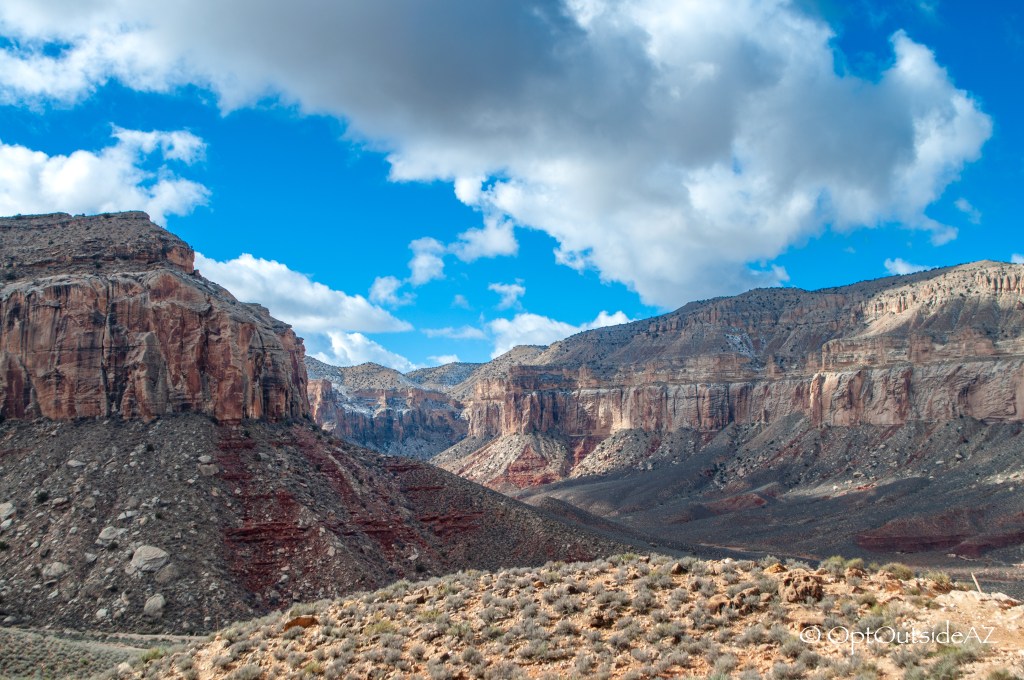
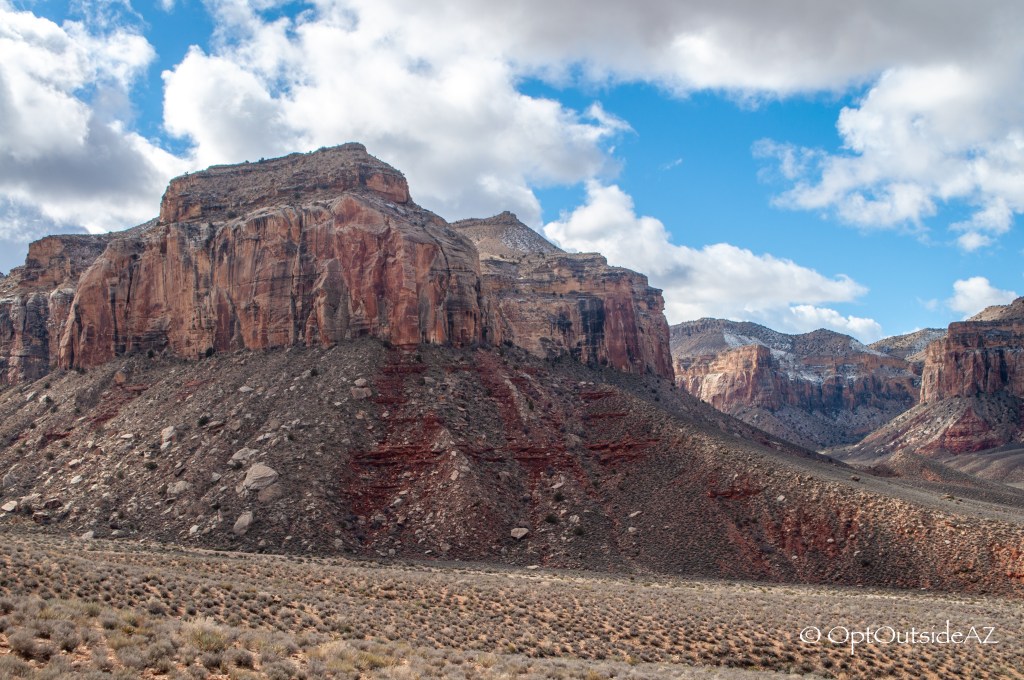
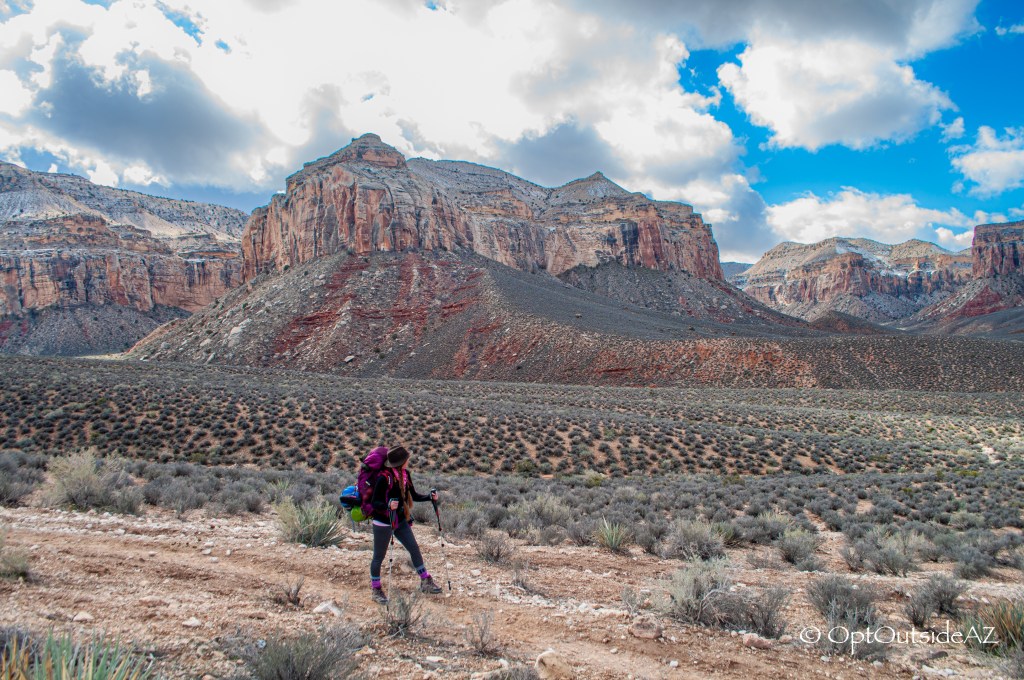
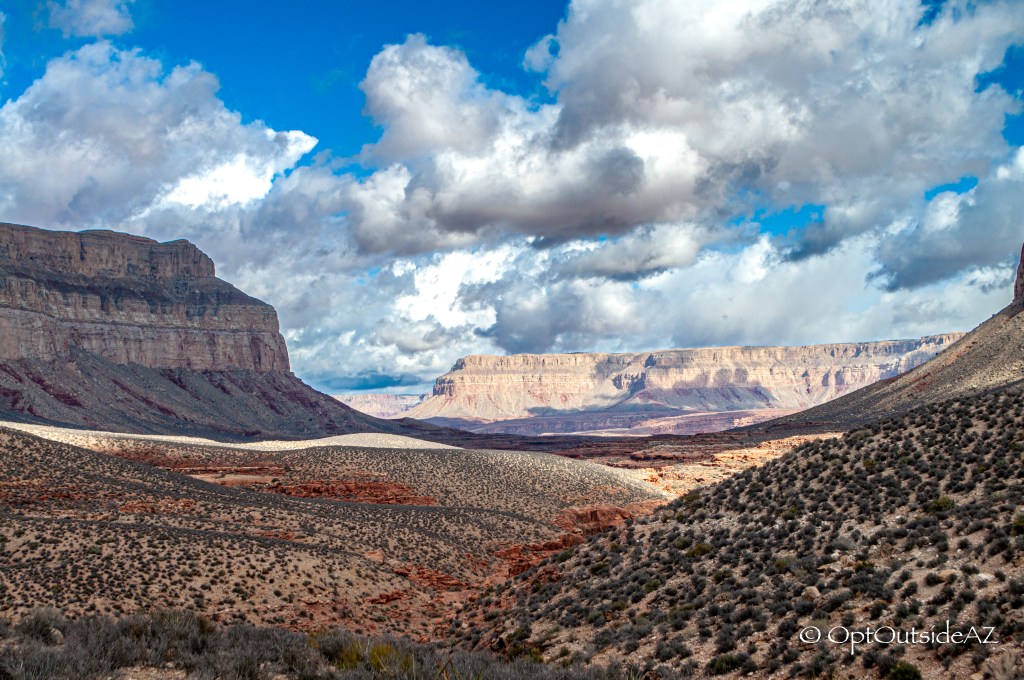
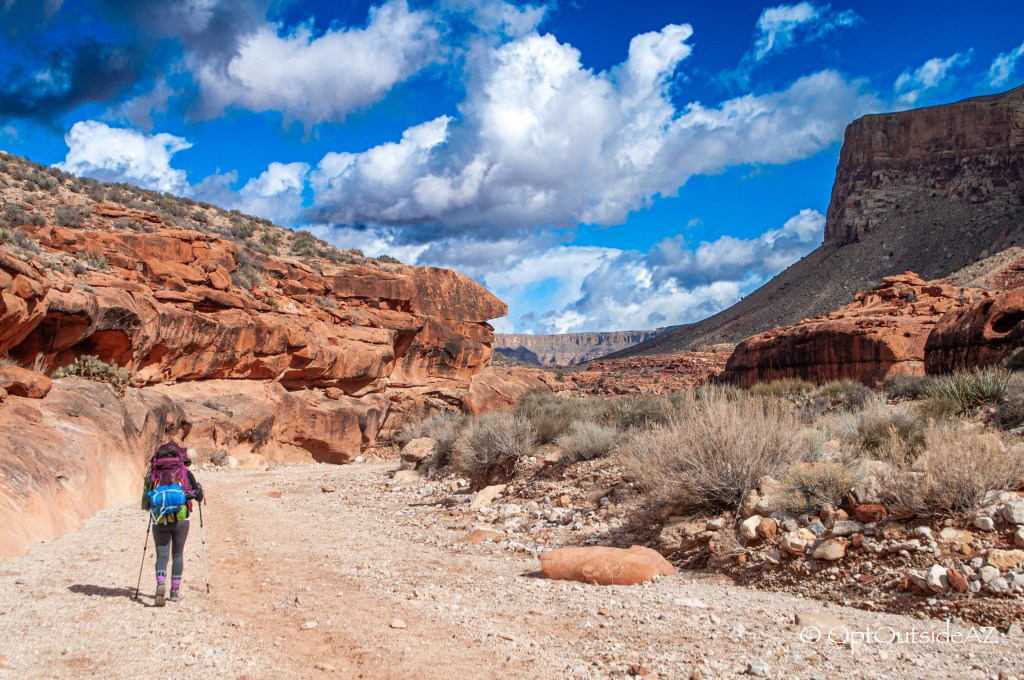
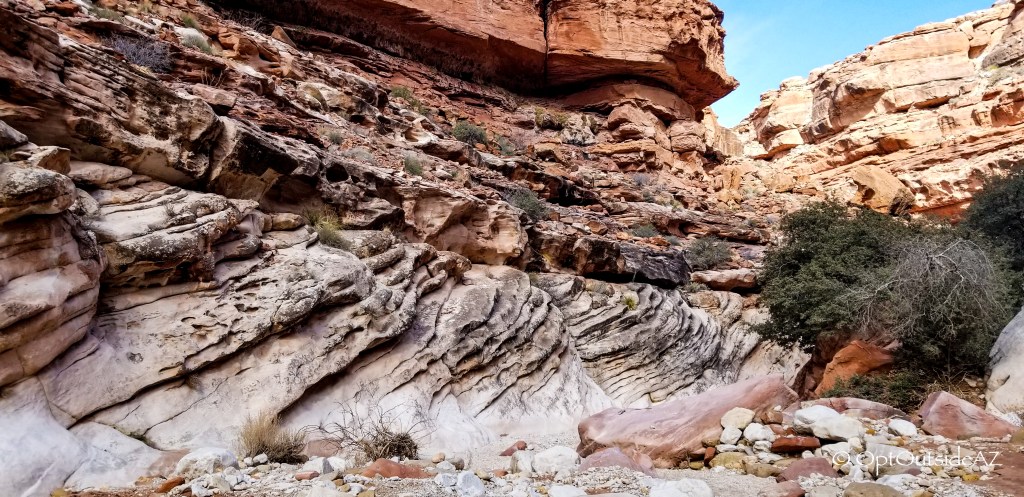
After you get down this steep section, the next section is long, bare, and a gradual descent. But what a beautiful area to admire. Thankfully, we had clouds, because even though it was February, it is still Arizona, and our sun is intense. The mountain walls will eventually start to rise as you push forward, revealing nice spots for a reprieve or a snack. Once clusters of vegetation change and thicken, this indicates you are getting closer to water.
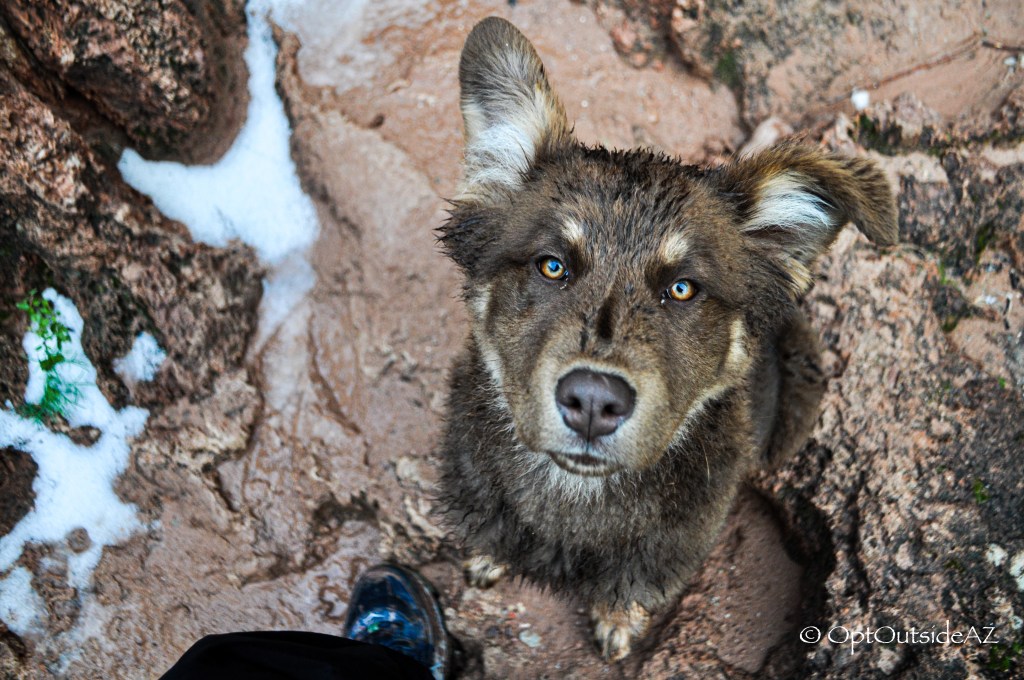
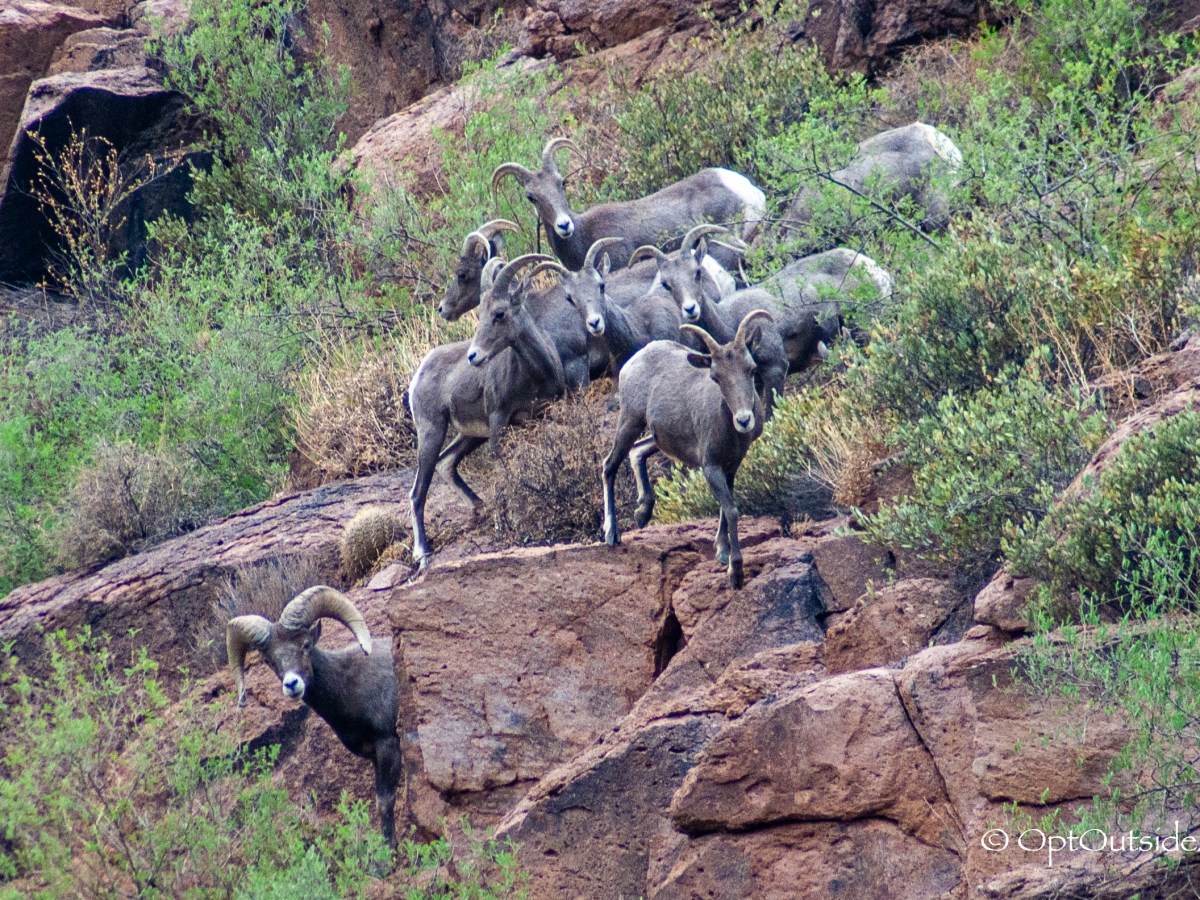
At 8 miles, you have reached the village of Supai. Although the Havasupai People have settled in this area for over 1,000 years, there are still just over 200 permanent residents (per the last Census done in 2010). When you walk into their area, you can see why they have chosen to remain: it is that stunning, and special. No photography is allowed here, so you will need to experience it empirically. But here is our hiking buddy Supai we met at camp! Such a sweet girl, we would have taken her if we knew we could give her a better life. A wild one so it would have been awful to remove her from this magic.
The General Store has eggs, canned items, and other needs, but if they are selling fry bread, carpe diem and get one. I brought mine down to the campground since it was just 2 more miles. Wanting to eat the bread and being exhausted, this was a love-hate decision yet did motivate me.
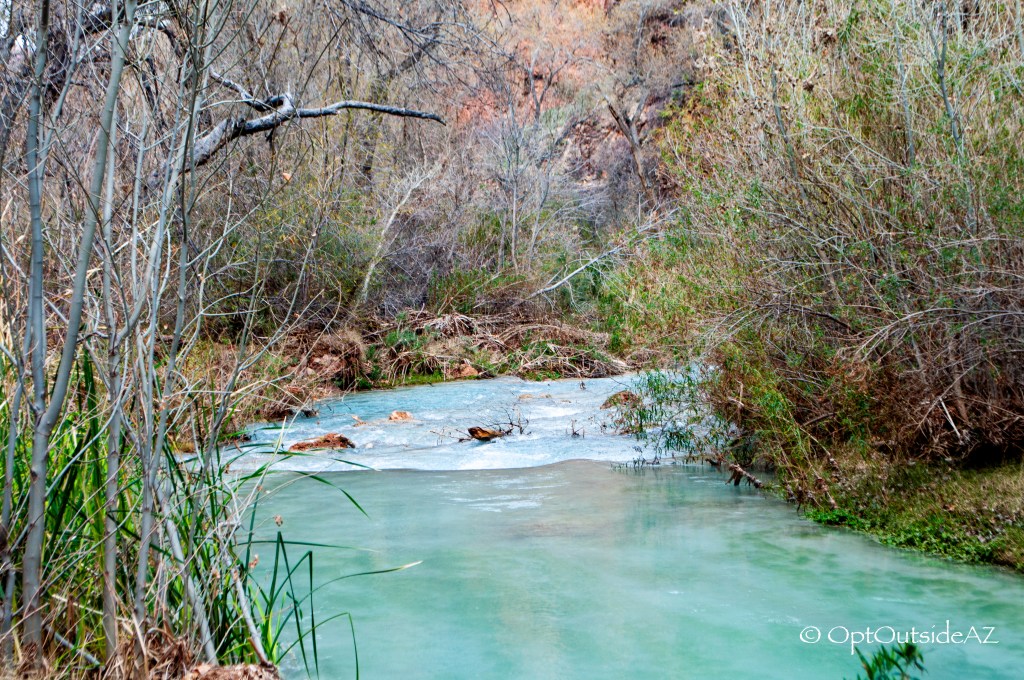
You will pass a few waterfalls along the way. Resist! Set up camp as soon as possible and save the exploring for another day. Our hustle paid off, and we found a solid camp spot right next to the blue-green waters of Havasu Creek. It came with a picnic table which is a desired commodity here.
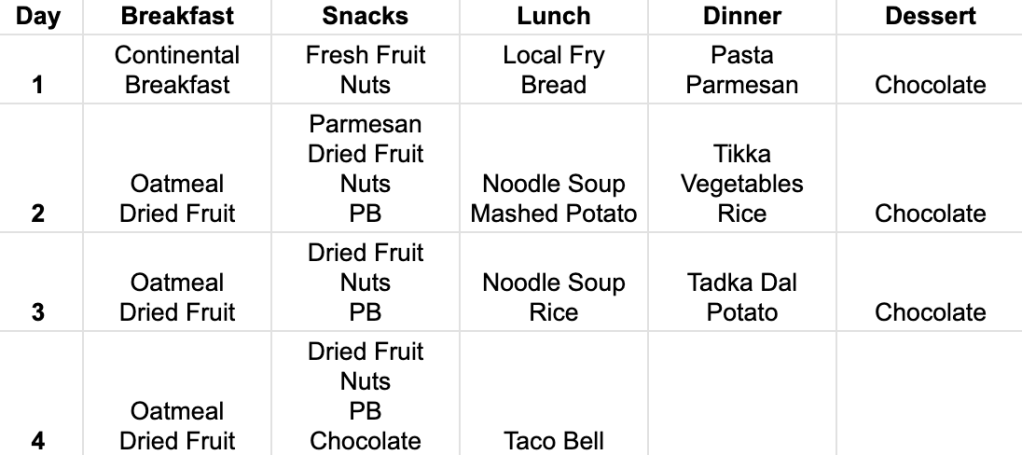
An afternoon rainfall came in right after we set up, so it was relaxation and meal time. I will take this opportunity to outline our meal plan of the next few days. There will be resources below that are affiliate links I’ve included to save you time and point you to gear I actually use. If you choose to use them too, you’re helping support OOAZ at no extra cost.
I love my Jetboil. If you are not aware, a Jetboil can boil 2 cups of water in less than 120 seconds. I love the expediency, the heat-sensitive temp gauge, how all accessories fit in the canister, and that it can be latched to your backpack. Worked perfectly for our needs because our food choices were based on taste, no other additions (like butter), and shorter heating times. We also decided on vegetarian food items to avoid dealing with the nastiness of meat remnants. Overall, a great decision for a backpacking trip.
For our first dinner, we reheated a homemade pasta dish that was vacuum-sealed and frozen prior to our departure. For our other dinners, we opted for simple, prepackaged East Indian food. The Trader Joe’s Indian Fare Packets (Tadka Dal and Tikka Vegetables) were perfect for our trip: so much flavor, and they only needed a little heat and water. Combined with either Idahoan Instant Mashed Potatoes or Mahatma Rice, this is a fulfilling, balanced, and flavorful meal that was very welcome on a cold night in the canyon.
Breakfasts and lunch were easy: rehydrating dried Goji berries in oatmeal was a newly discovered nutritional delight, and any time I needed an energy boost, the Justin’s Peanut Butter packets gave me what I needed. Prioritizing completing the leftover parmesan first, we varied our snacks with these plus other dried fruit, nuts, and remaining chocolate. The flavored hydration packets were a nice deviation to refresh and hydrate the palate. Lunch would be a noodle soup with either rice or potatoes to accompany (if necessary). Since adventure was our primary focus, we wanted our day-food to be quick and functional.
Major Lesson from Day 1: It is important to stake your rainfly tautly and away from the tent. After our tent setup and the rain began, we took a nap and woke to moisture dripping from the apex of our tent. The rainfly had been touching and moistening the exterior, and eventually created a drip that my sleeping pad had been soaking up!
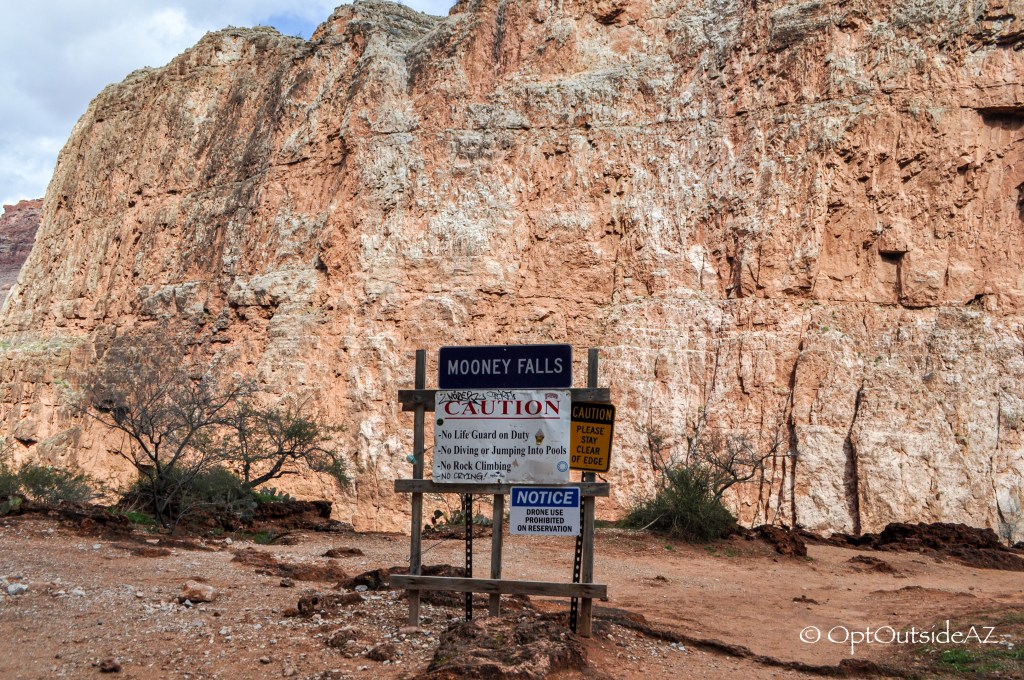
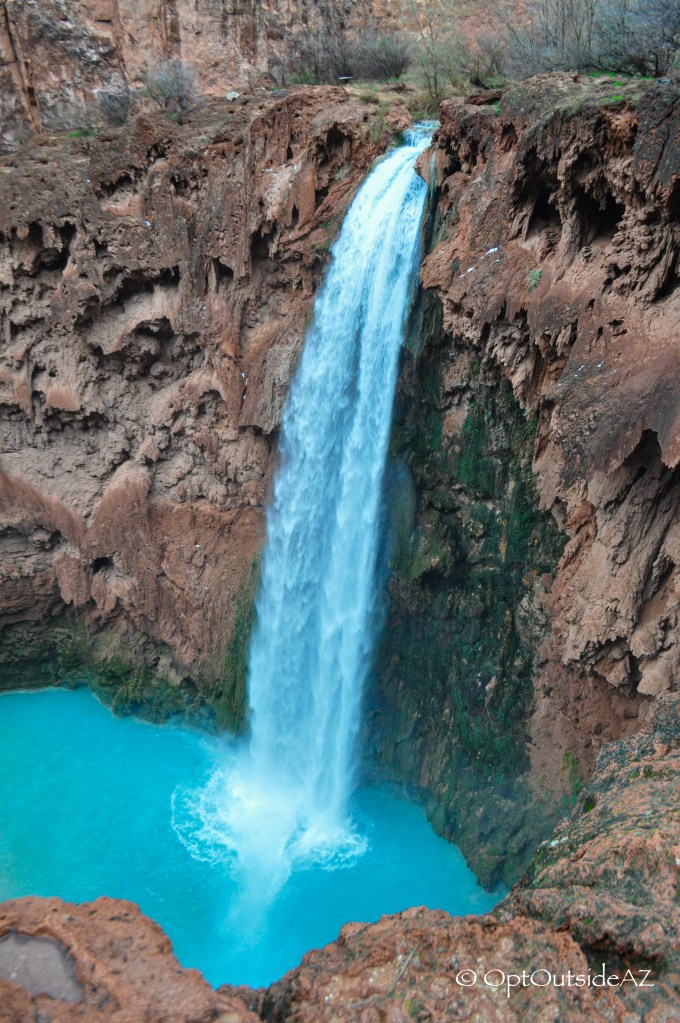
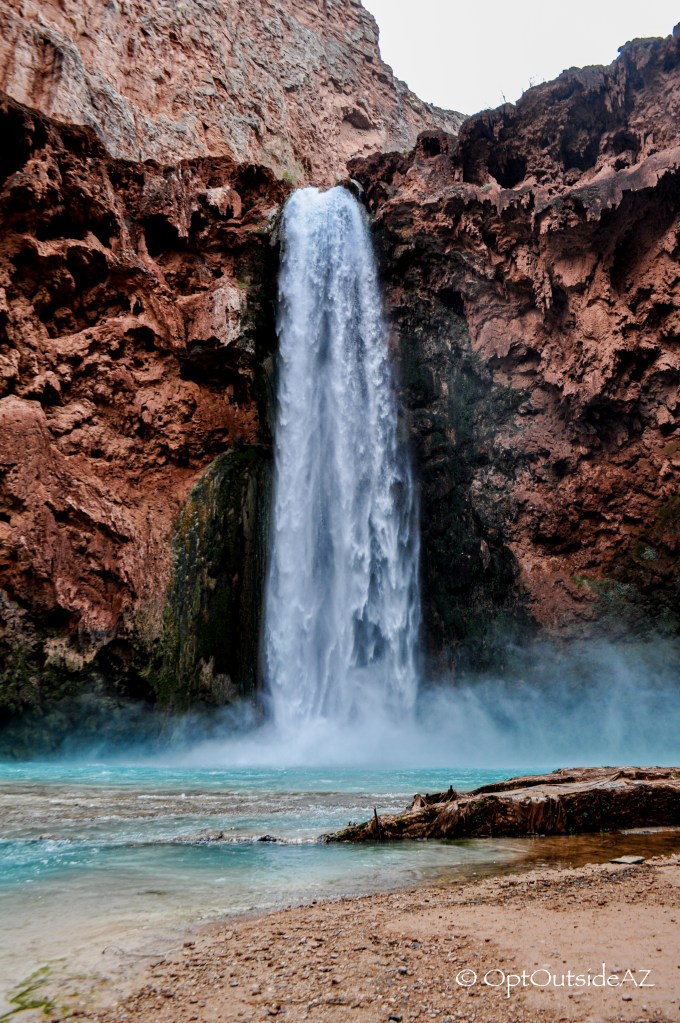
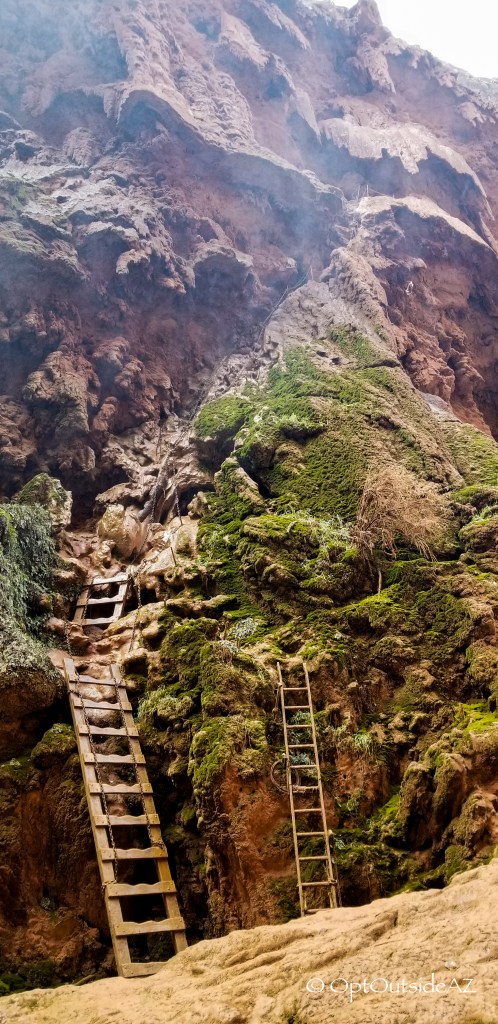
Day 2 is usually the “big” hike day, so we decided to see how far we could get past Mooney Falls, the grandest of waterfalls in this area, where you must risk your life to view its splendor. You have to climb down the side of the mountain and, at times, through it too: dark, narrow, twisty chutes have been carved into the rock. Thankfully, there are installed iron rungs, chains, ladders, and ropes for added grasping potential during the climbs and the descent. Meanwhile, the waterfall is loud, and a steady mist coats all surfaces in an unnerving slickness. It is a 200+ foot descent, so not an ideal place for people with acrophobia (fear of heights). One time while we were descending, someone froze midway. While I have sympathy for that person, the bottlenecking of unamused hikers began developing, with everyone in awkward, haphazard positions. It sucked for everyone. So please, be considerate.
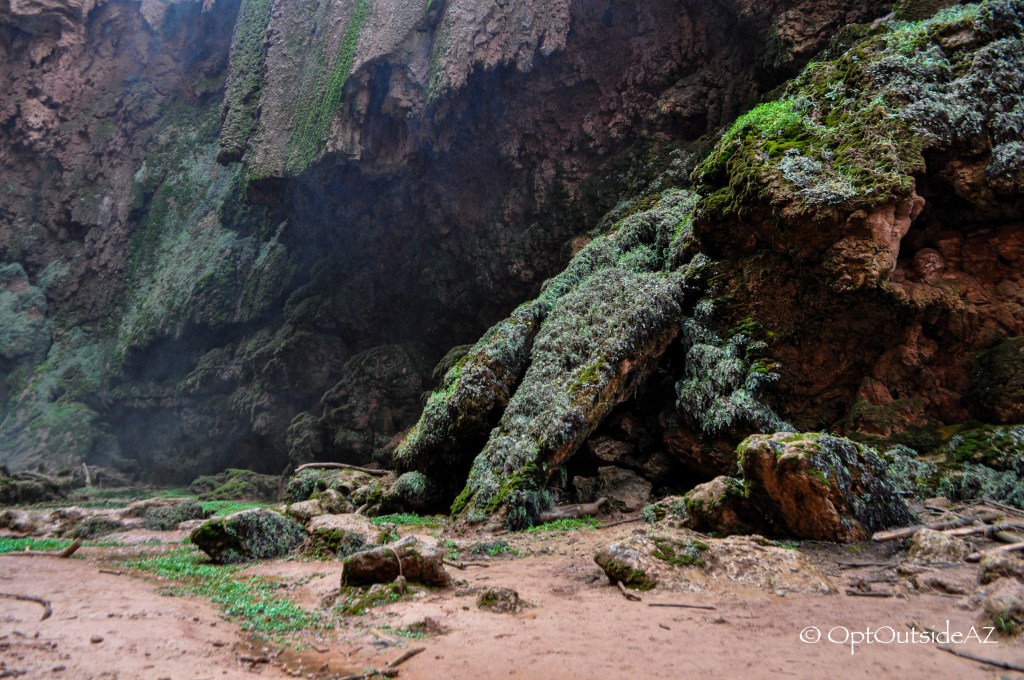
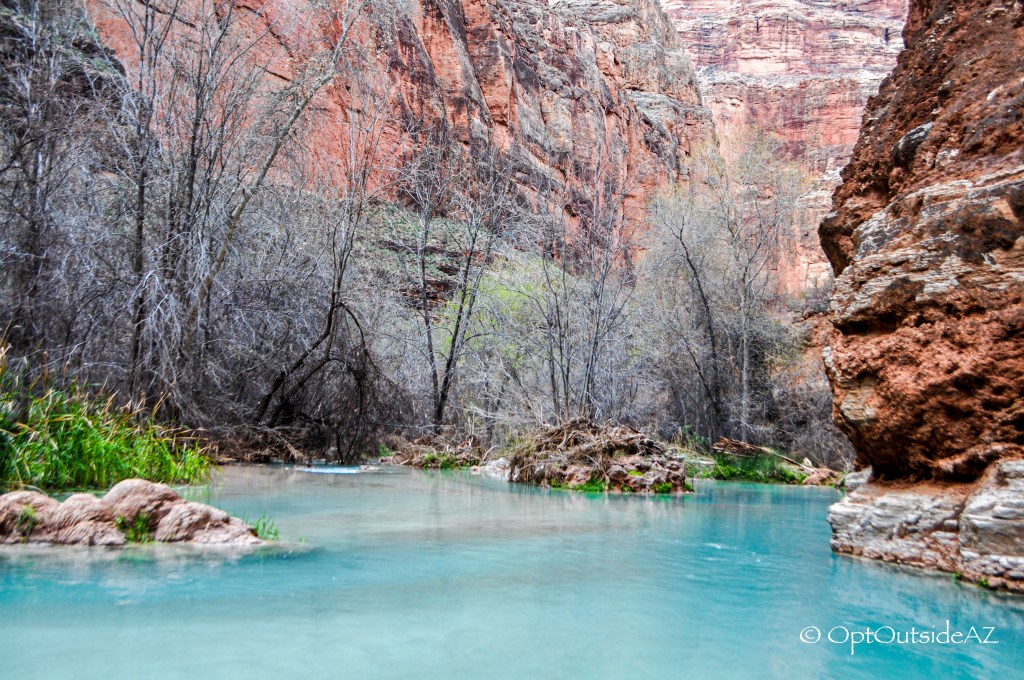
In this area, you are walking alongside Havasu Creek as it strives to meet the Colorado. The canyon walls loom overhead as the creek twists through the micro-meadows of dead blackberry bushes. In the summer, this area is overgrown with greenery and vines (I will do a summer review of the hike as well).
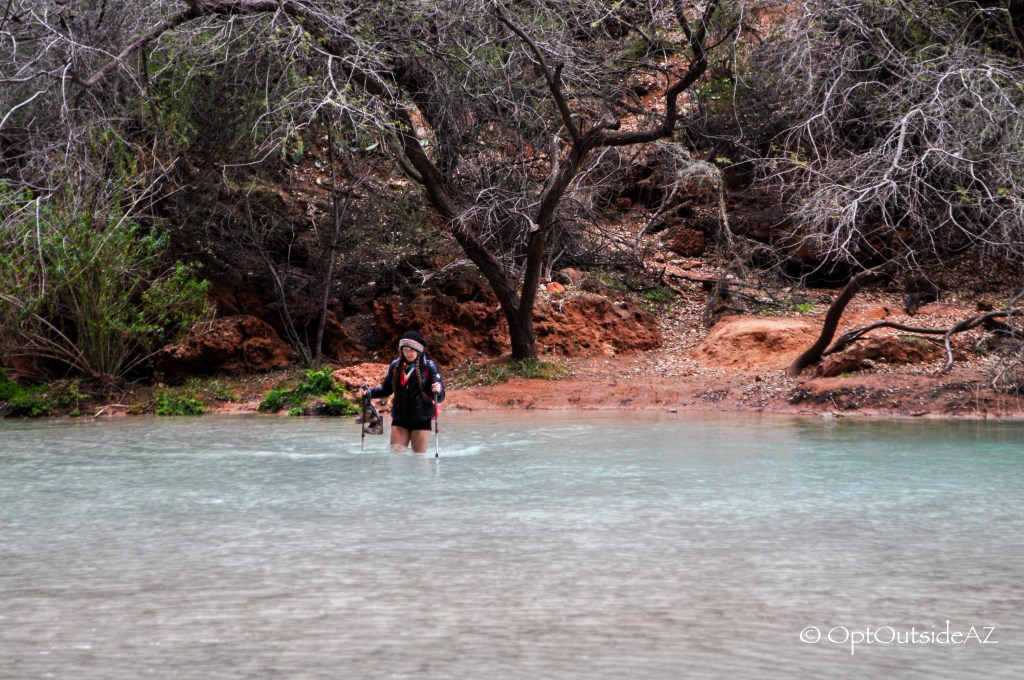
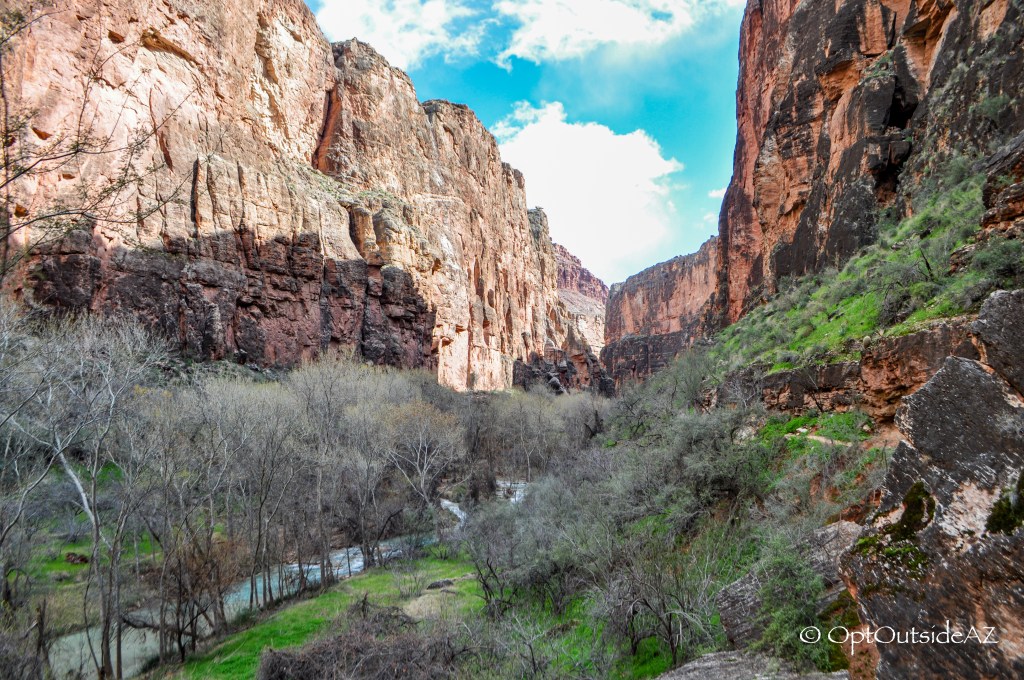
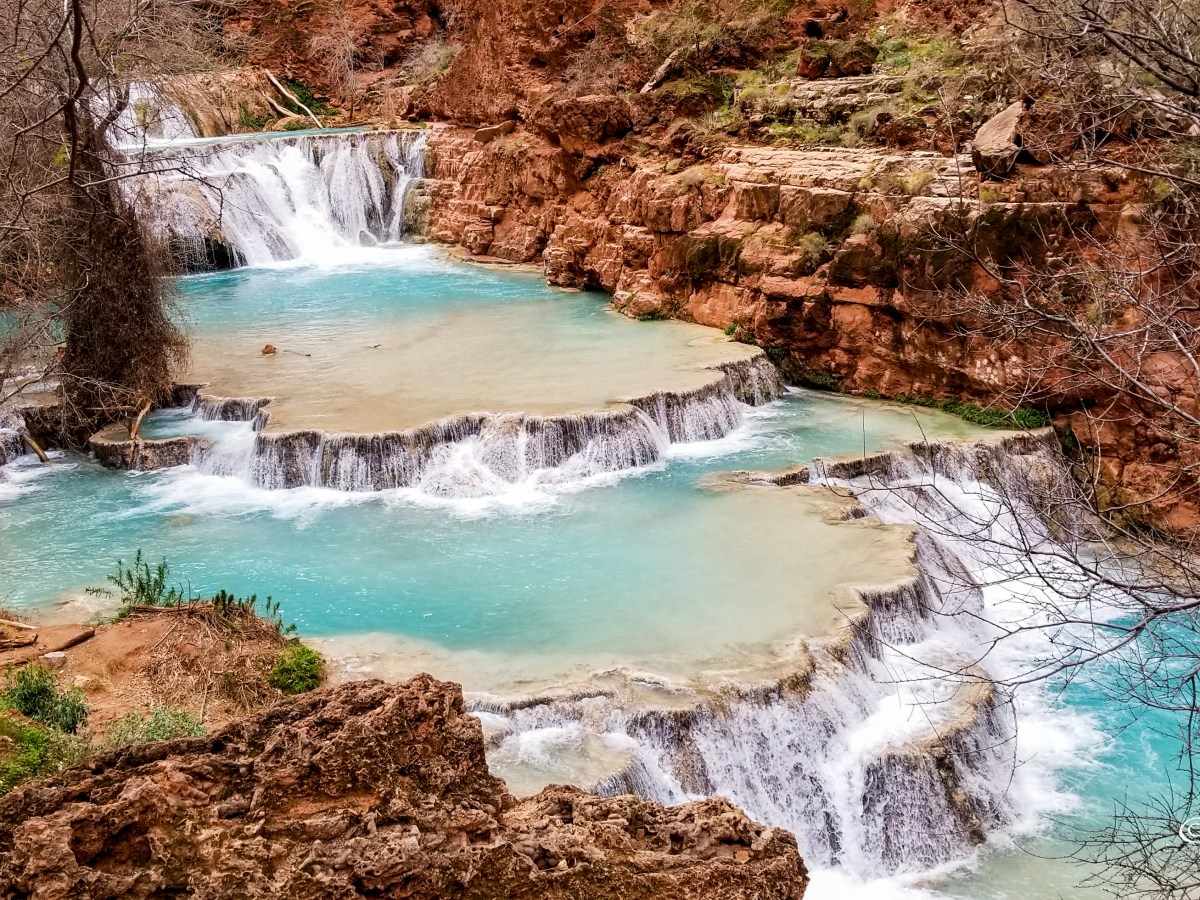
We knew we would not make it to the Colorado River (that would be 16 miles roundtrip), but hopefully we could get a glimpse of Beaver Springs (6 miles). Significantly less, yet we were very proud of ourselves this day because we crossed that river 6 times. In February! One of the positives about Havasu Creek is that it maintains a 70-degree temp throughout the year, however, it felt much colder than that. The mental game was brutal, but manageable, and TOTALLY WORTH IT! Beaver Springs is so beautiful, with numerous cascading falls where the aquamarine blue contrasts with the rusty oranges of the earth. Easy swimming. Secret spots to explore. Isolation.
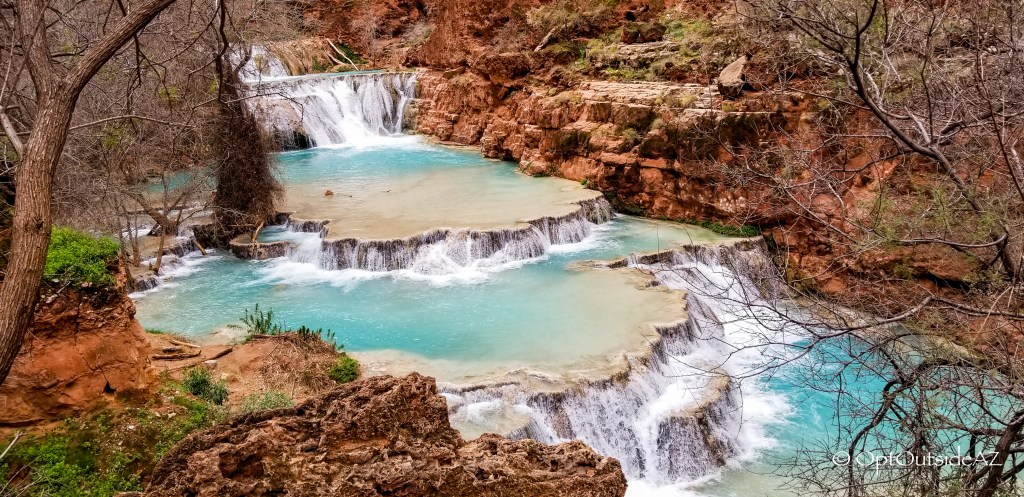
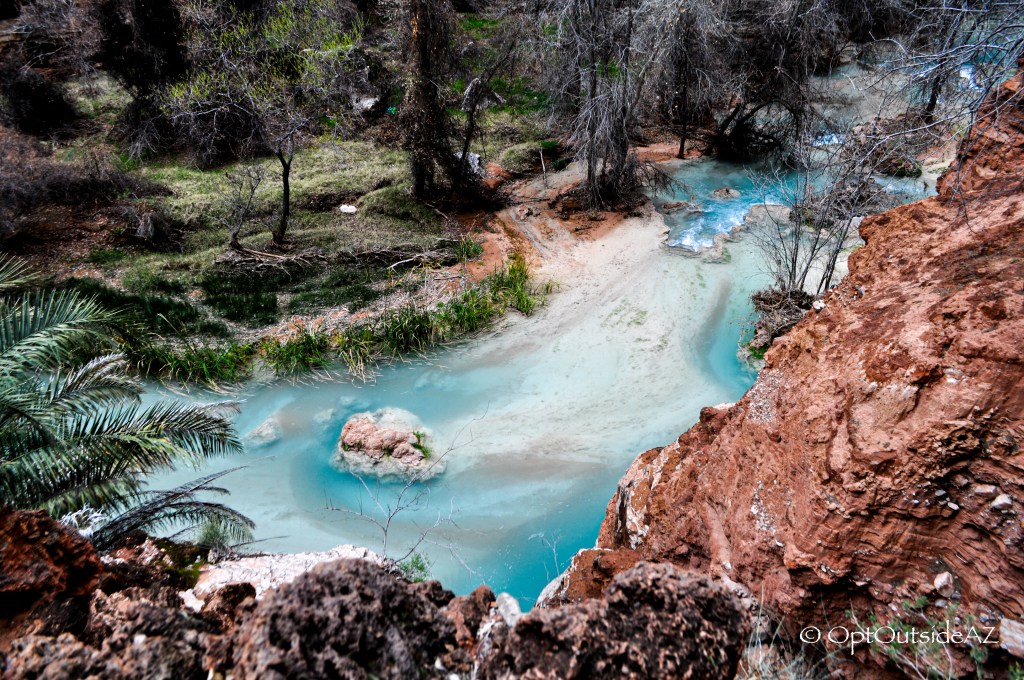
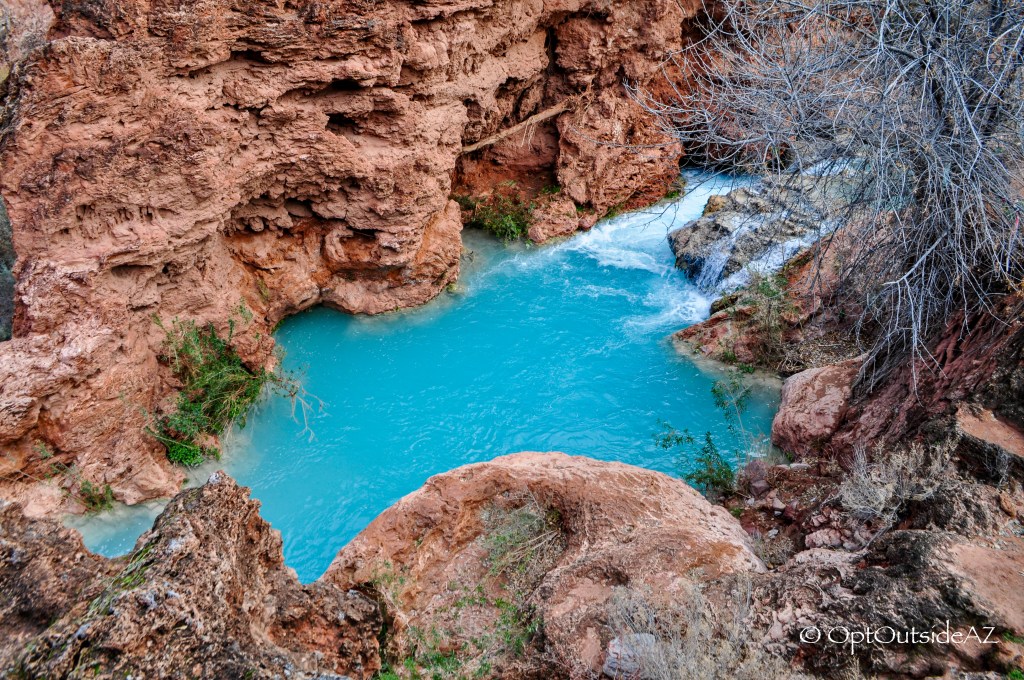
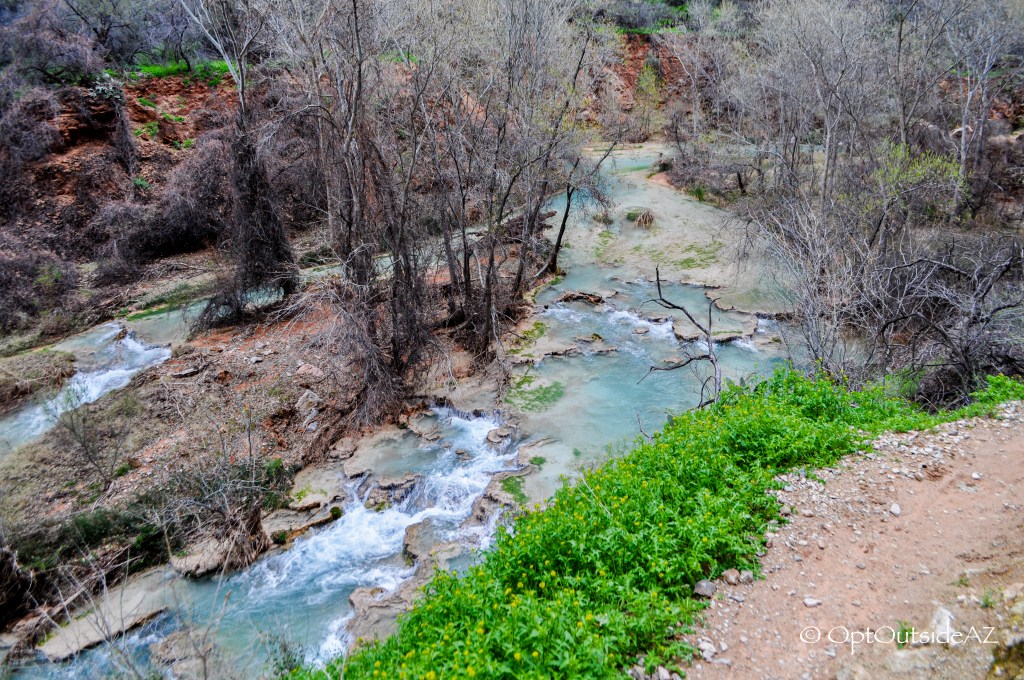
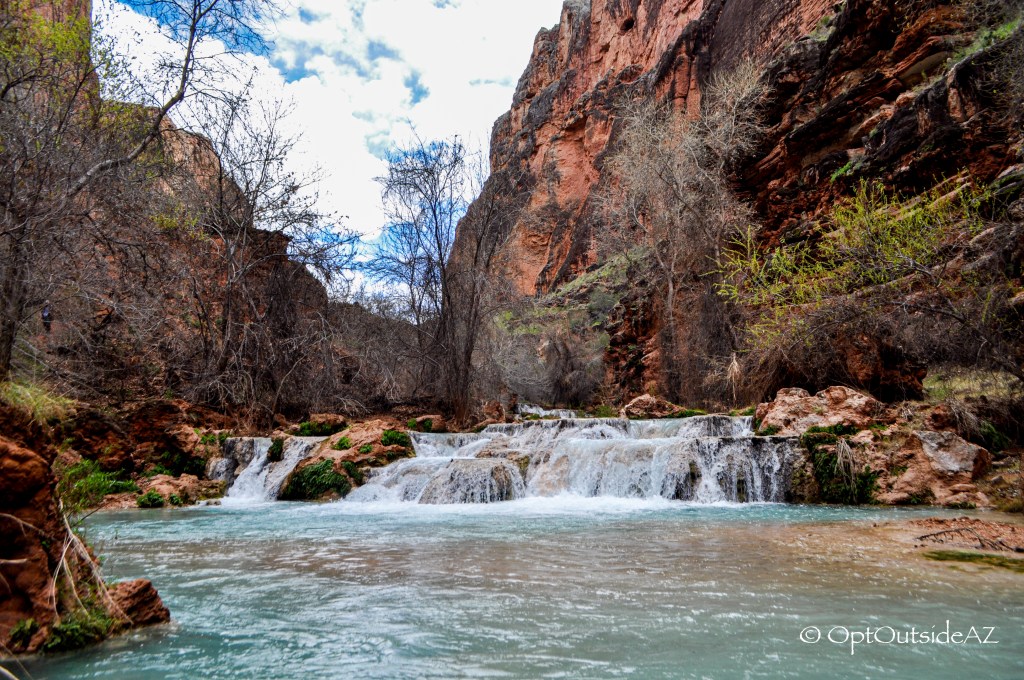
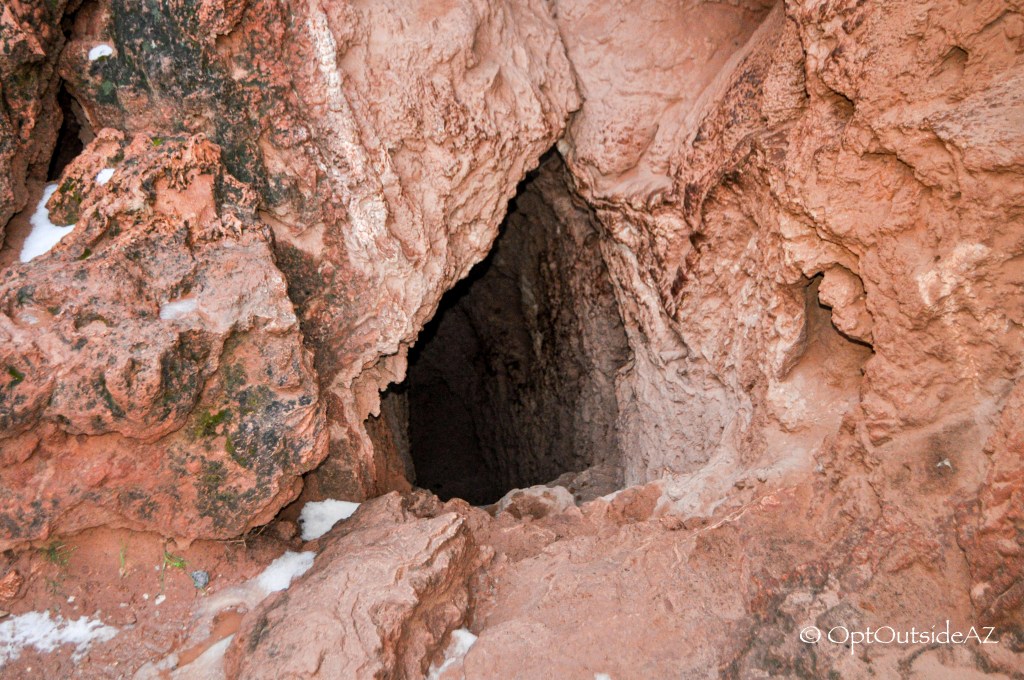
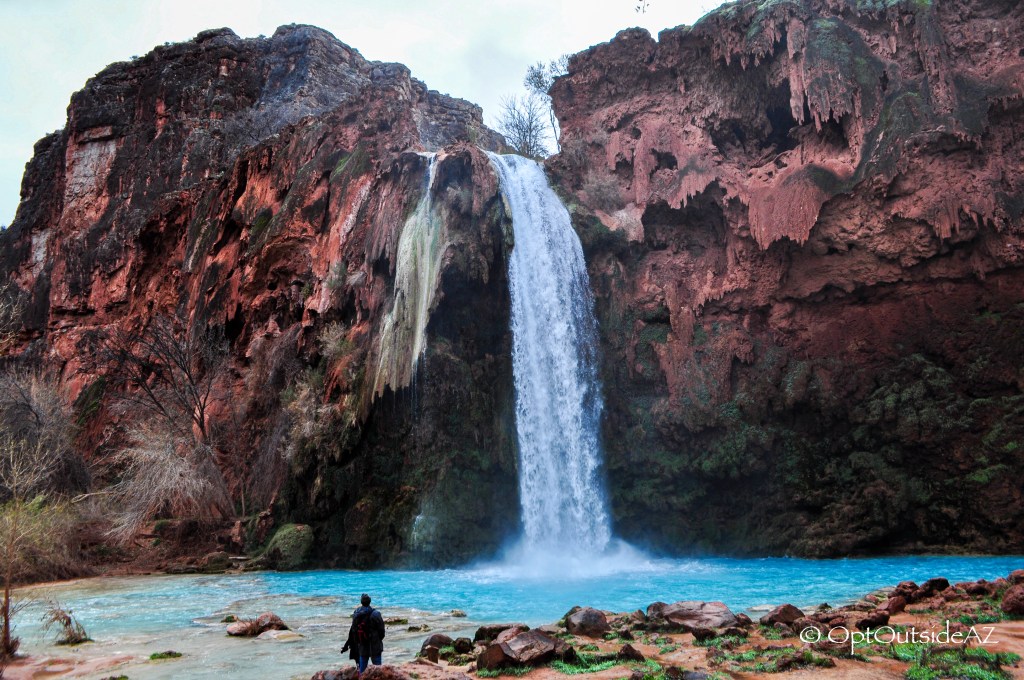
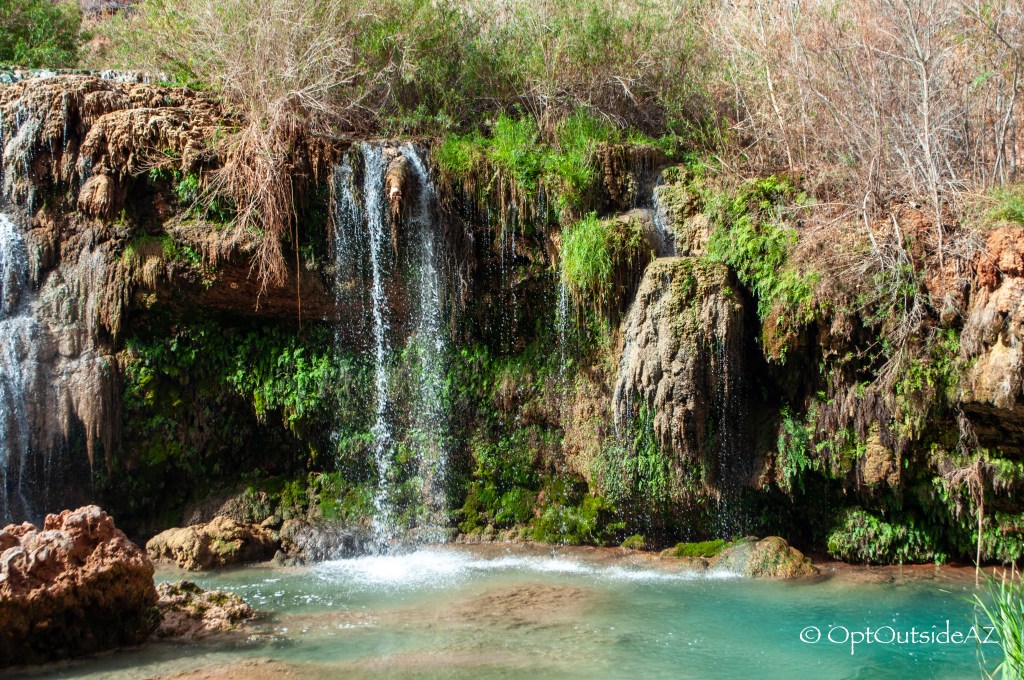
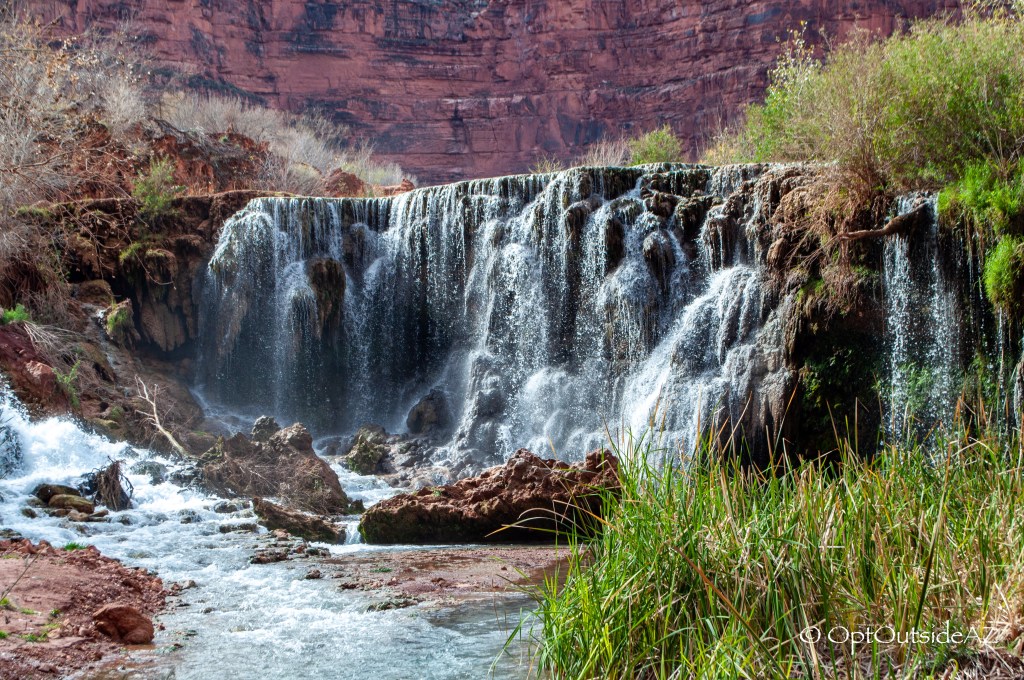
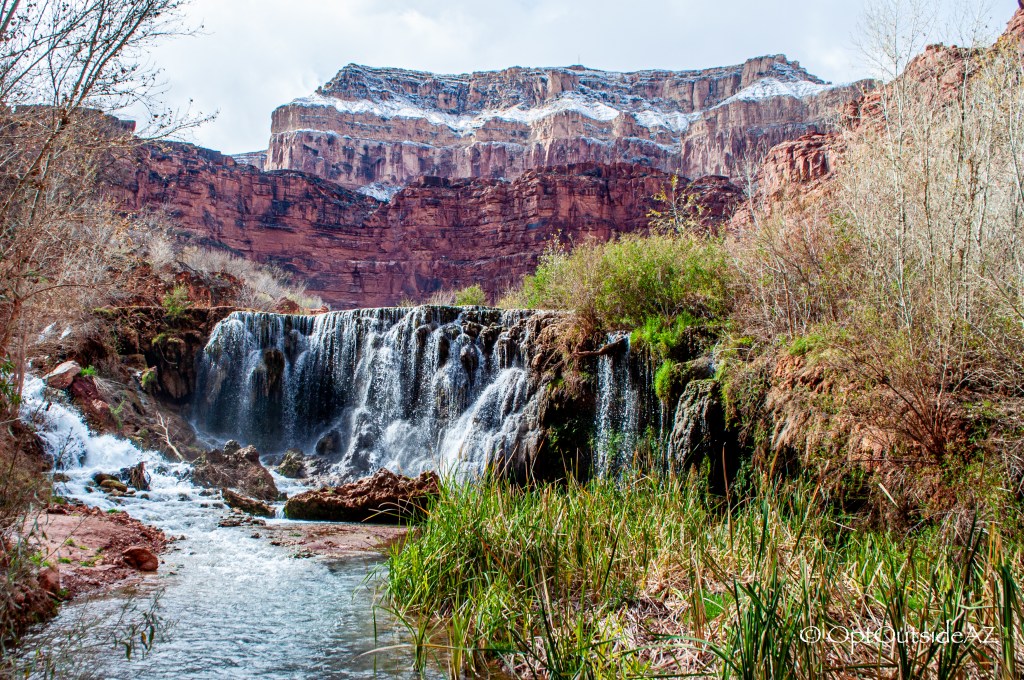
Day 3 we spent exploring the upper parts of the canyon, including the falls we did not explore upon entry. The first massive waterfall you see heading up from camp is Havasu, and there is plenty to explore here. There are some mini-cascading falls around here, also a secret cave near the base, and some areas one can explore at the crest. But very dangerous!
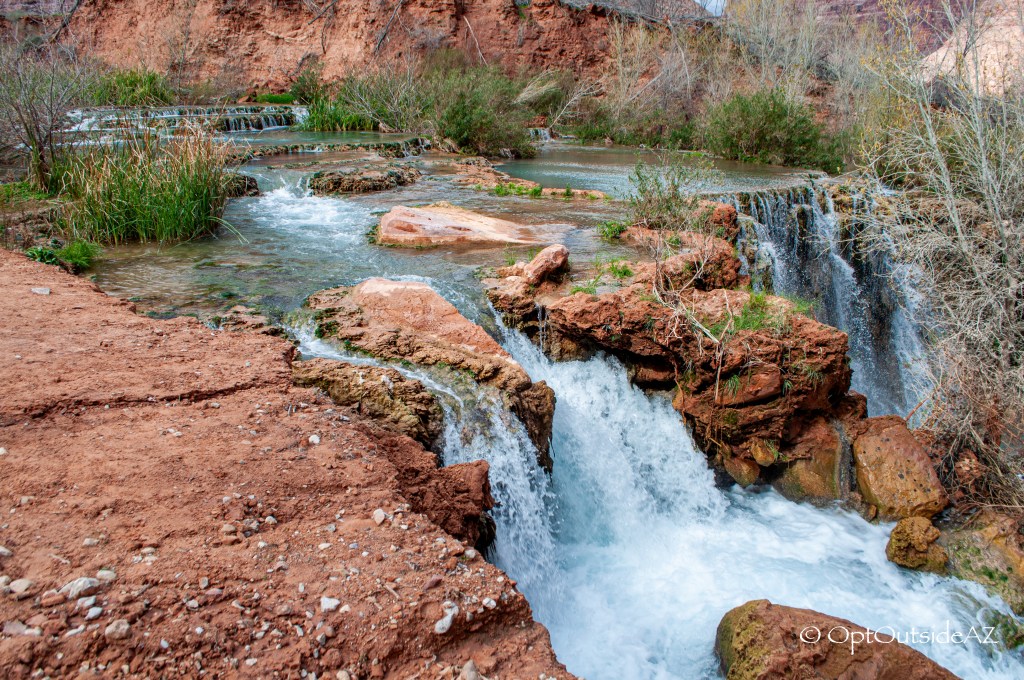
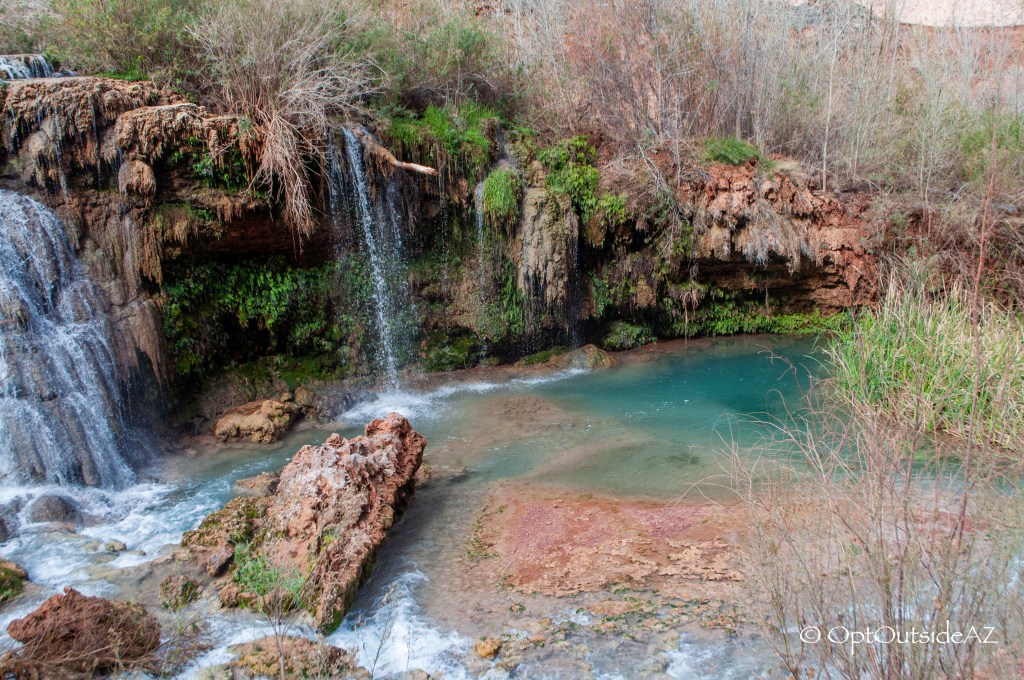
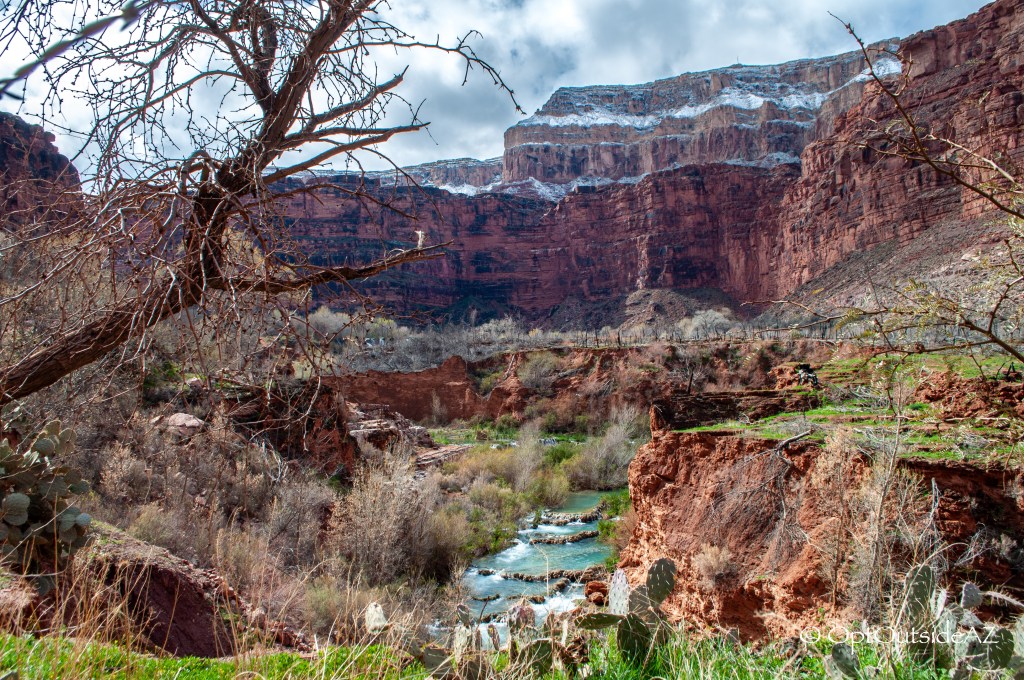
The next series of waterfalls are New Navajo Falls (Lower and Upper) and Fifty Foot Falls. Back in 2008, a massive summer monsoon changed the path of Havasu Creek and reshaped what we once knew as Navajo Falls. Even more of a reason to see this wonder as it is now, before the changes that will eventually occur. These are different and pretty; I love the constantly changing stalagmites hanging at the crest of at Fifty Foot, and enjoy the views/lunch spot from New Navajo Falls. No swimming on this day, but is ideal in the summer!

Day 3 is also the day of assessment. What do we have left to eat, and when? Garbage pack-up and compression. What could we pack now, before the morning? We also were dreading the hike up with our slightly lighter packs. And then the power of manifestation occurred! Hoping for someone to have 2 spots available for packs and to somehow come to me, I would have a crisp $100 bill for them. And this is exactly what happened when I overheard a passerby’s conversation. Thrilled!
PSA: Pack out what you bring in. If you cannot do this and leave your stuff behind, just know you are a bad person and should not come here. It is against Havasupai rules, and it is offensive to venture into this pristine area and leave your impact behind. The group across from us left 3 stuffed garbage bags behind! Made me sick. Apparently, the tribe is being tougher and enacting fines, so let’s do better for the collective benefit.
Pickup for your packs to be hauled up is between 6–7am, and expect to re-acquire them by 1pm. With just the daypack, likely less than 20 pounds, it was still a tough hike, haha. Someone even offered me $20 for my hiking poles (what a terrible offer for my Leki’s!), but this is when those poles truly pull their weight.
We might have hung out at the campground a bit longer, but a storm was coming in so we made our way out early. There were actually a few people we encountered who left a day early because of the storm. You cannot chance stuff like this in the canyon. Abundant water is very dangerous down there, resulting in evacuations, closures, and death. It must have been pretty serious because the next day in The Valley, Four Peaks was coated in snow.
More to divulge about summer exploration…will save that for next time!
Ren Fou
MORE TRAIL READING
Something went wrong. Please refresh the page and/or try again.


Got a hot take?